Hagia Sophia
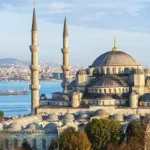
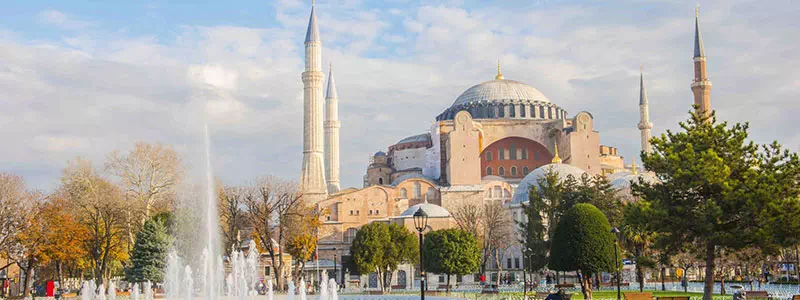
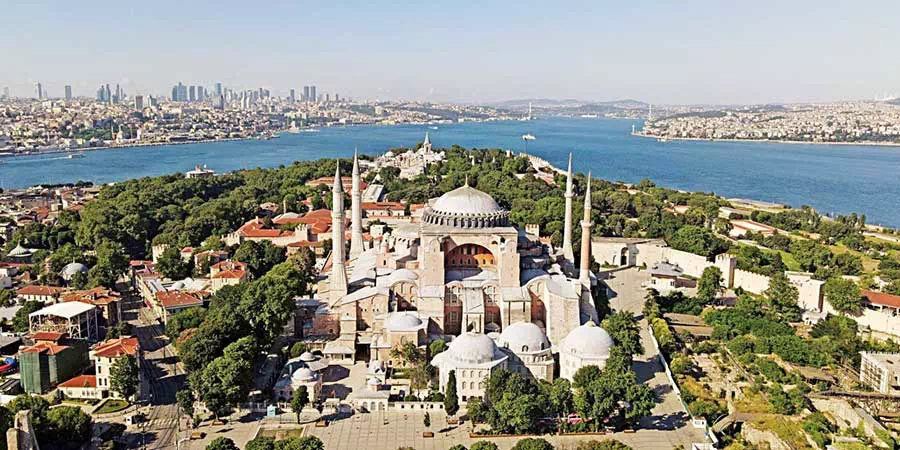
Hagia Sophia (Ayasofya) is known as a magnificent architectural work with a worldwide reputation. Why is this building, which has been a church for 916 years and a mosque for 482 years, is so famous? What are the features of this building, which is visited by millions of tourists every year?
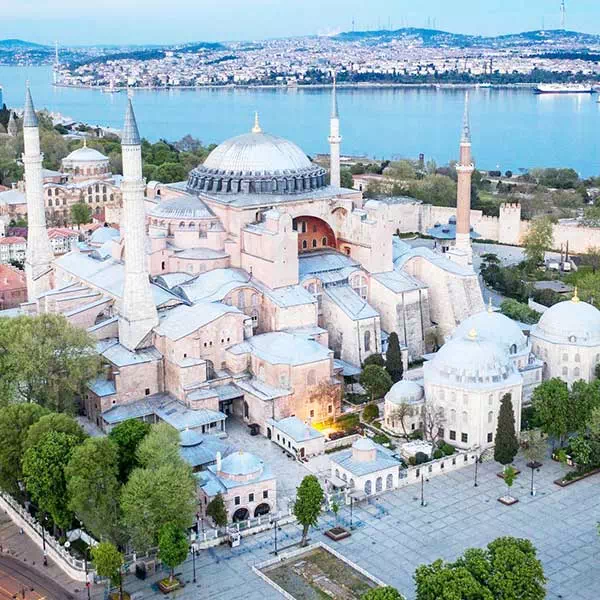
Hagia Sophia, which is one of the most important monuments of world architecture history that has survived until today; has an important place in the art world with its architecture, magnificence, size, and functionality.
The building, which was open to worship as a church for 916 years, was converted into a mosque when Fatih Sultan Mehmed conquered Istanbul in 1453.
From the 5th century onwards, it was defined as Hagia Sophia (Holy Wisdom). Hagia Sophia served as the cathedral as the capital’s largest church, crowned by monarchs throughout the Eastern Roman Empire.
Hagia Sophia was converted into a museum in 1935 upon the order of Mustafa Kemal Atatürk and the decision of the Council of Ministers.

Ottoman and Byzantine Heritage in Istanbul: Private Istanbul Guided Tour
A journey to the history of Byzantine and Ottoman Empires. Discover the most important architectural masterpieces of Roman Emperors and Ottoman Sultans.
8 Hours Full-Day Private Guided Istanbul Ottoman and Byzantine Historical Sites Tour. All historical sites in Sultanahmet square.
Certified professional guide in various language options
Historical Tour Private Guide VIP Transfer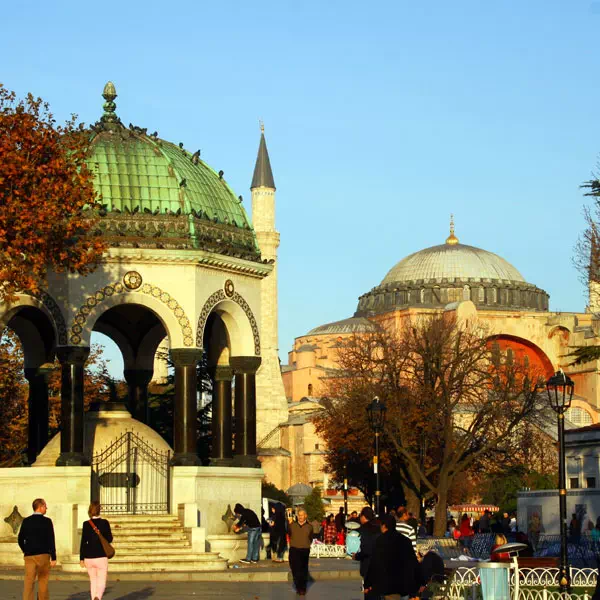
Istanbul Daily City Tour
Byzantine and Ottoman Traces. Hagia Sophia, Blue Mosque, Hippodrome and Obelisks, Grand Bazaar, Topkapi Palace, Little Hagia Sophia Mosque.
8 Hours Full-Day Istanbul Ottoman and Byzantine Historical Sites Tour
Included Free Services in this Tour
Lunch Live Guide All Transfers All TicketWhat are worth seeing in Hagia Sophia?
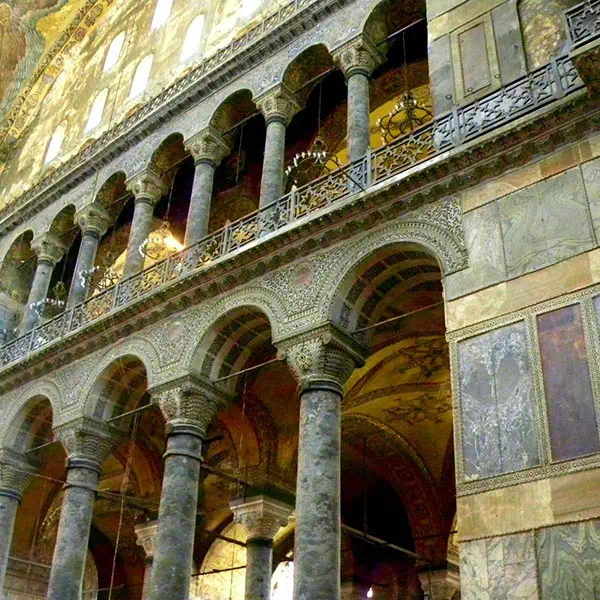
1. Columns and marbles were brought from ancient cities
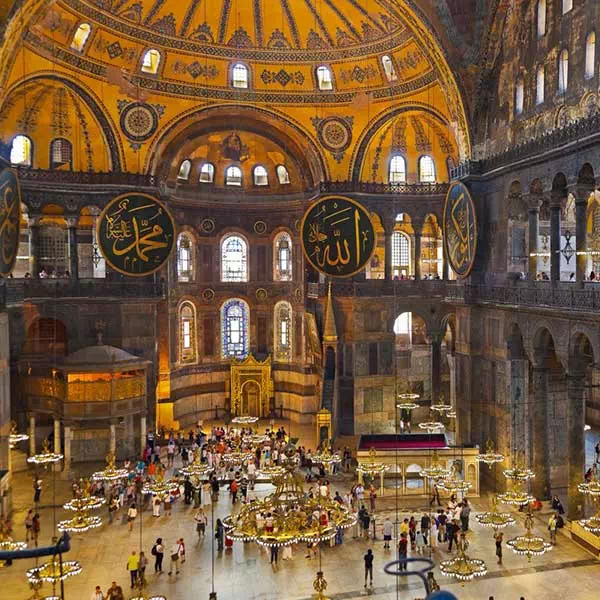
Columns and marbles used in this structure; It was brought from the ancient city ruins in Anatolia and Syria, such as Aspendos, Ephesos, Baalbek, Tarsus. The white marbles in the building were brought from Marmara Island, green porphyries from Eğriboz Island, pink marbles from Afyon, and yellow marbles from North Africa and used in Hagia Sophia.
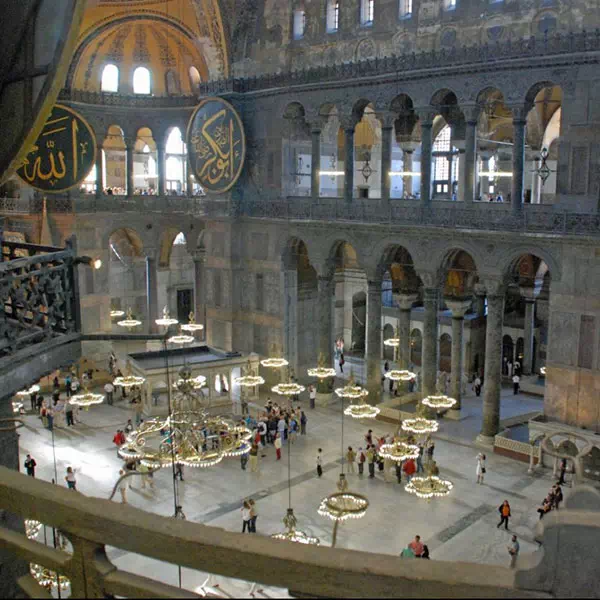
2. Mosaic ornaments attract attention
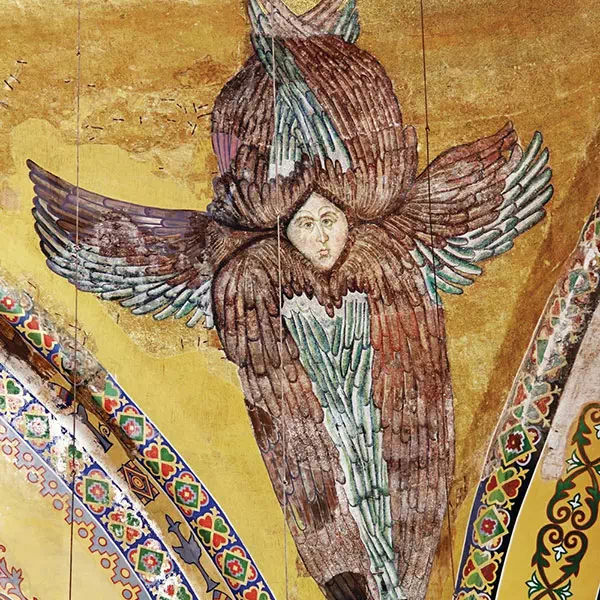
All surfaces except the marble-covered walls of Hagia Sophia are decorated with beautiful mosaics. Gold, silver, glass, terracotta, and colored stones were used to make the mosaics.
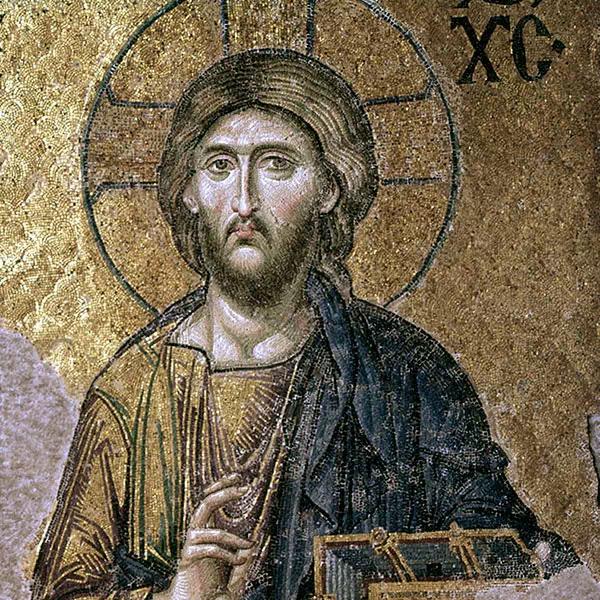
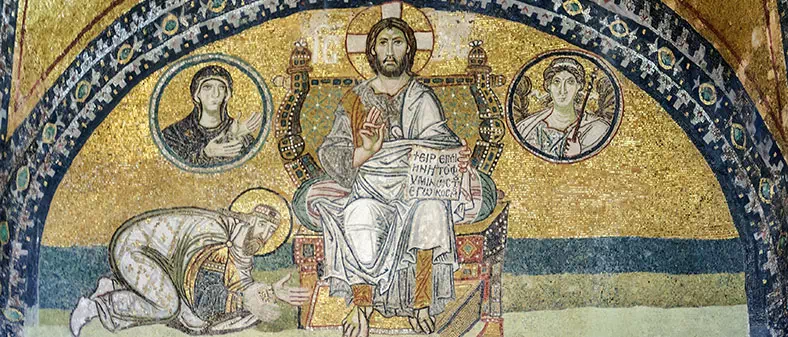
3. VI. Leon Mosaic
Pantaktrator Jesus on the Emperor’s Gate is in the middle of the depicted mosaic; Jesus sits on a throne with a backrest, conspicuous with his right hand, and holds a Bible open with his left hand. The inscription on the Bible is in Greek, “Peace is with you. I am the Nur of the World”. Archangel Gabriel (Gabriel) in the medallion on the right and Hz. Mary is depicted. VI of the Eastern Roman Emperors prostrate him at the feet of Jesus. Leon (816-912). The mosaic depiction is dated to the 10th century.
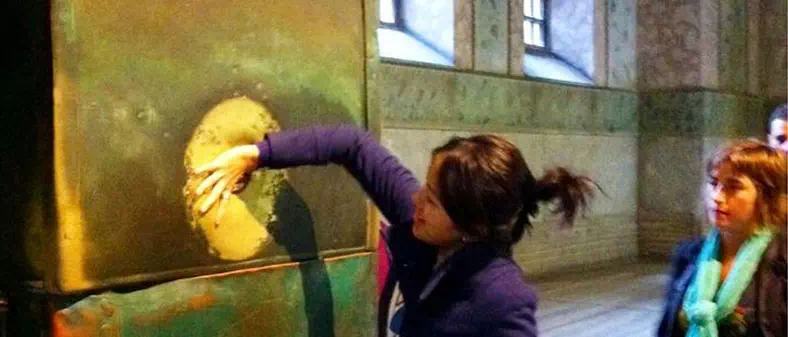
4. Wish Column
There is a column carved in the northwest direction of the building or covered with bronze plates called wish columns, and a center carved column. In some sources, it is stated that this column gained holiness among the public over time. There are rumors that it helped people recover during the Eastern Roman era; According to the legend, Emperor Iustinianos, who walked through the building with a severe headache, leaned his head on this column and realized that after a while his headache passed. Upon hearing this event among the public, it was said that the column had healing properties. Therefore, people believed that when they put their fingers in this cavity in the column and rub their wet fingers over the place where they felt the disease, they would heal. In another legend, this wetness is said to be the tears of Mary.
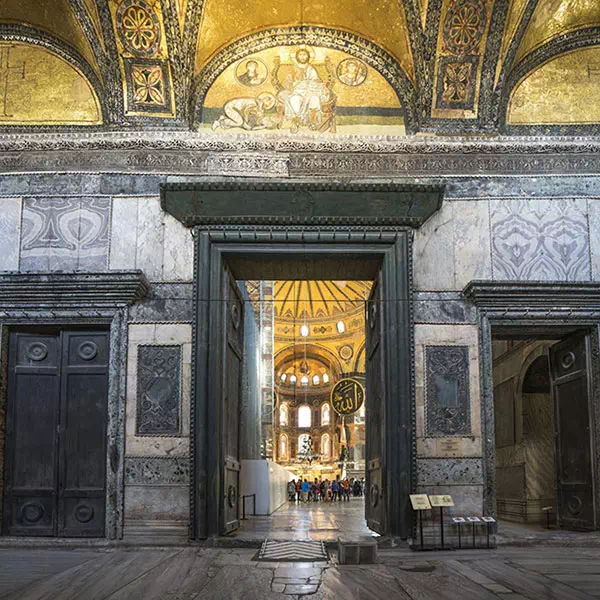
5. Emperor’s Gate
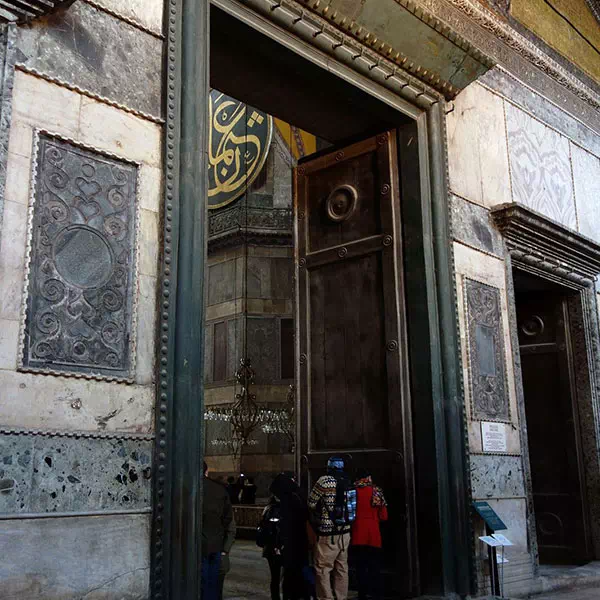
The gate that dates back to the 6th century, which provides the transition from the interior narthex section to the main place, is the biggest door of Hagia Sophia. 7 m. The Emperor door in the neck is bronze framed and made of oak wood. The door, whose wings are covered with bronze plates, was used only by the Emperor and his nature. In the sources of Eastern Rome, it is well known that the door may have been made of the woods of Noah’s Ark, as well as the chest of the chest where the holy signs of the Jews were hidden.
6. Talisman gates
According to the legend, Hagia Sophia has a total of 361 doors, but 101 of them are big and talisman. Because whenever these doors are counted, an extra door appears.
7. Sacred Relics of Hz.Jesus
Emperor, according to Christian discourse, Hz. The cross where Jesus was crucified and Hz. He brought the nails used when they crucified Jesus from Jerusalem and hid them in one of the secret sections of Hagia Sophia. The reason why they hide the Sacred Relics to Hagia Sophia is Hz. It was that Jesus would land in Hagia Sophia in the world 40 thousand years later.
8. Apocalyptic date
Upon entering through the door in the south direction of the building, Hz. It is said that Hızır wrote the date when the apocalypse will break. In the column, “Yevm-i Pazar on eighteen, 1038 a year” is written.
9. Devil’s prison in Hagia Sophia
After the conquest of Istanbul, when Fatih Sultan Mehmet ordered Hagia Sophia to be converted into a mosque, he also held Akşemsettin responsible for this work. Although the workers tried to raise them for Friday prayers, the devil did not want Hagia Sophia to be a mosque, giving the workers all sorts of occasions. When Akşemsettin realized this situation, he prostrated and prayed. Allah, who accepted his prayer, imprisoned the devil in a marble in Hagia Sophia.
Plan Your Visit with Acetes Travel
Reading about What to See in Hagia Sophia? See how Acetes Travel can make it part of your Istanbul itinerary — book direct, free cancellation, 24/7 WhatsApp support.
Explore the Istanbul Old City Day Tour →